From Curing to Wear: What Tire and Rubber Manufacturers Should Be Testing
2026-06-17
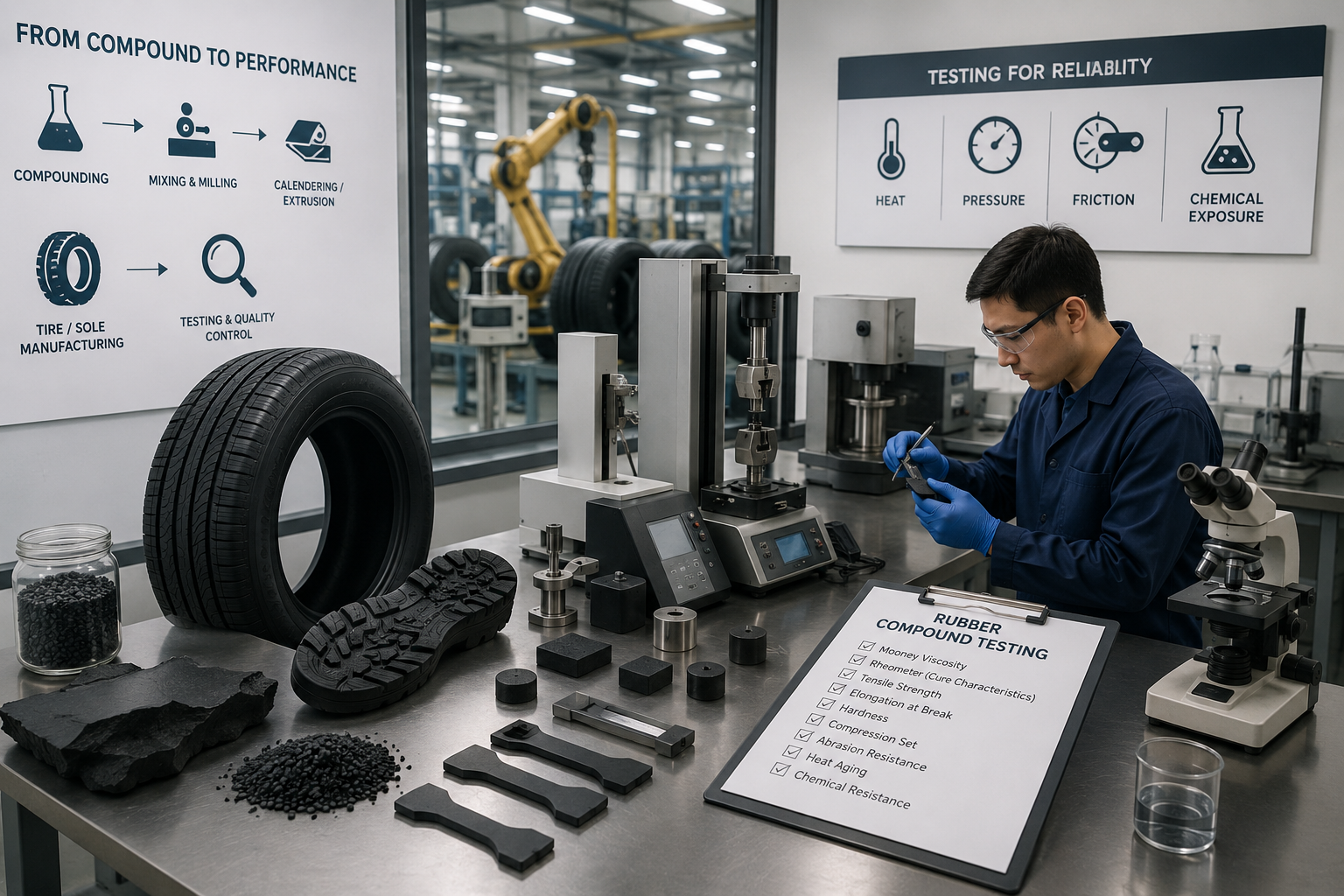
Rubber is deceptively simple-looking material — a tire, a sole, a seal all start from the same basic compound. But getting that compound to perform reliably under heat, pressure, friction and chemical exposure requires a tightly controlled testing process at every stage of production. For tire manufacturers, rubber compounders and footwear sole producers alike, understanding these core test dimensions is key to consistent quality and fewer field failures.
1. Curing Characteristics — Getting the Vulcanization Process Right
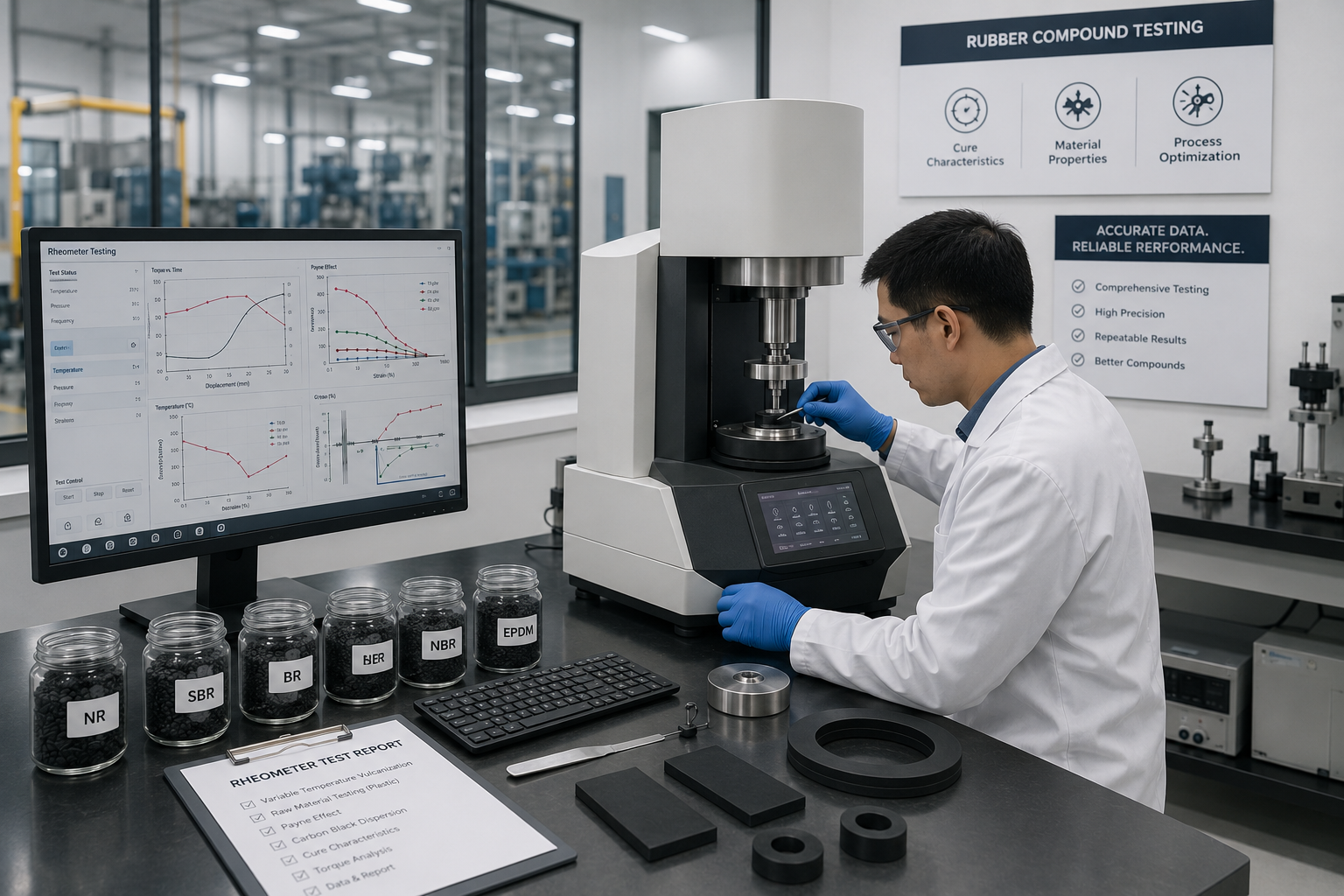
Before a rubber compound becomes a finished product, it goes through vulcanization — a curing process that transforms raw rubber into a durable, elastic material. An Automatic Disk Rheometer is used to assess this curing behavior, measuring how the compound's stiffness changes over time and temperature during the curing reaction. This data — covering parameters like cure time, scorch time and torque — helps manufacturers fine-tune their formulations and processing conditions, ensuring the final product achieves the right balance of elasticity, hardness and durability. Getting curing characteristics wrong at this stage can lead to compounds that are under-cured (too soft, prone to deformation) or over-cured (brittle, prone to cracking).
2. Oil and Chemical Resistance — How Rubber Holds Up in Real-World Conditions
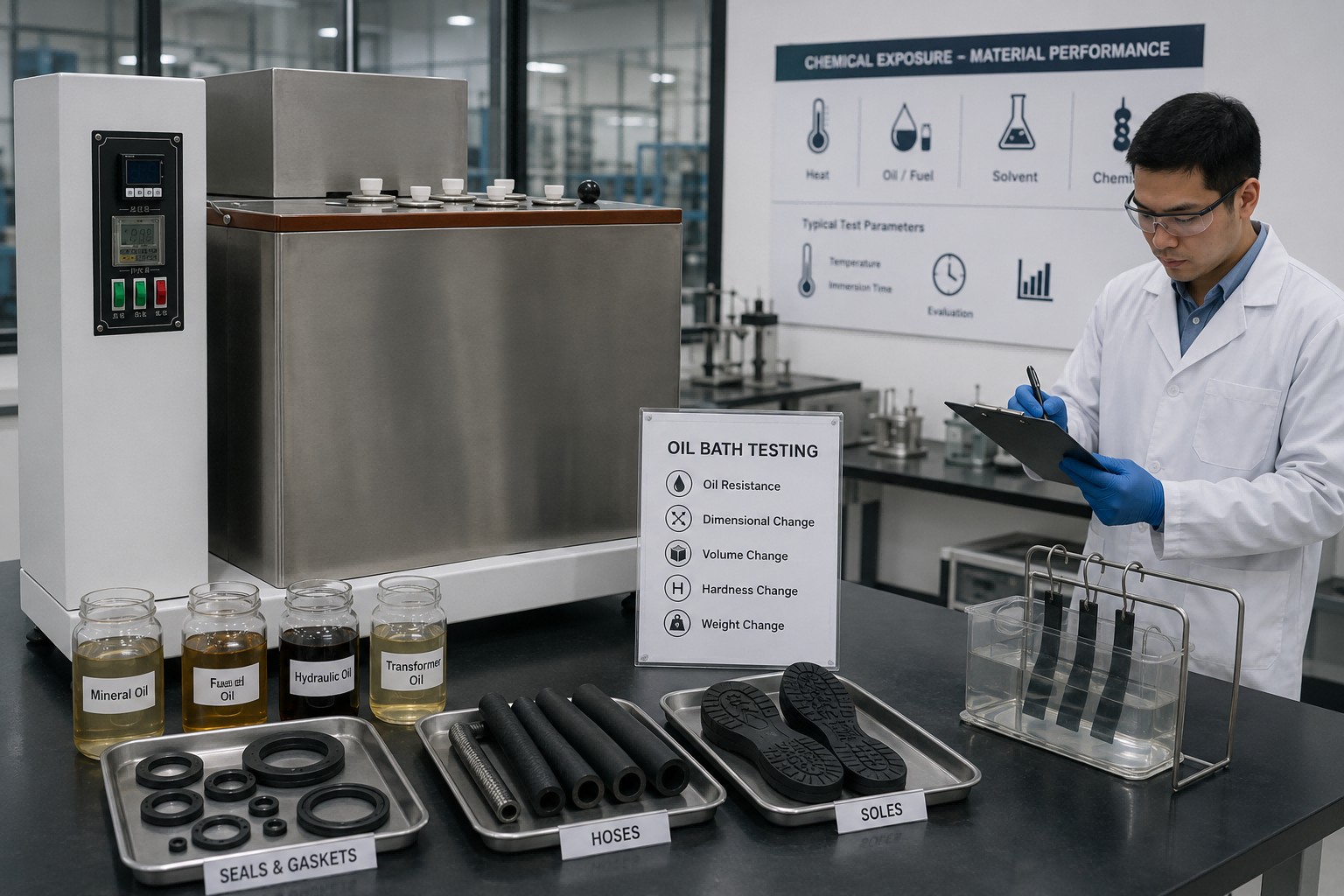
Many rubber and plastic products — seals, gaskets, hoses, soles — are routinely exposed to oils, fuels and other chemicals during their service life. An Oil Bath is specifically used to test the oil resistance of various materials, as well as the dimensional change rate of PE and PVC plastics under oil exposure. By immersing samples in heated oil baths across a range of temperatures, manufacturers can evaluate how a compound's volume, weight, hardness or strength changes after prolonged chemical exposure — critical data for applications in automotive, industrial and footwear sectors where oil or solvent contact is common.
3. Abrasion Resistance — Predicting How Long Rubber Will Last
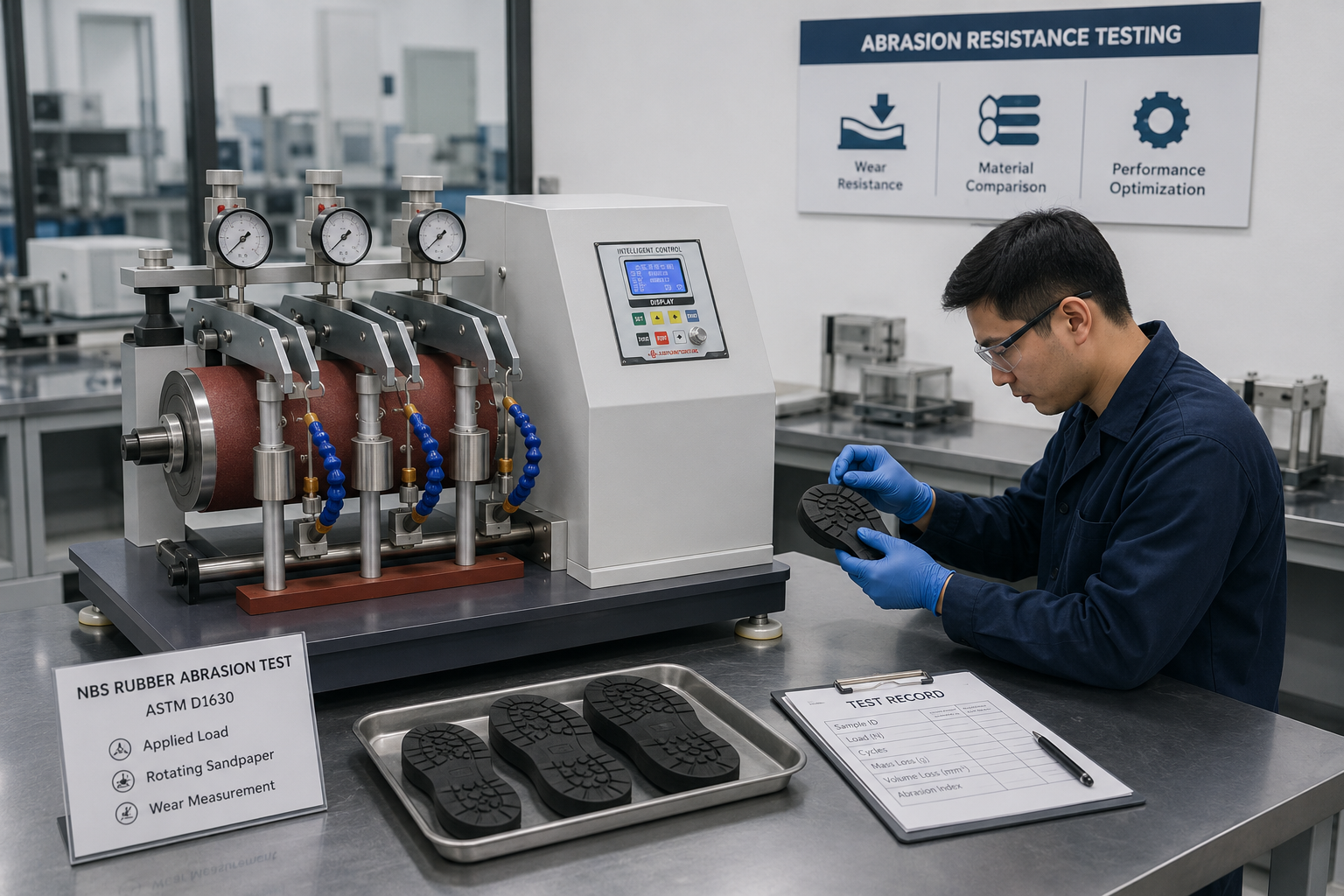
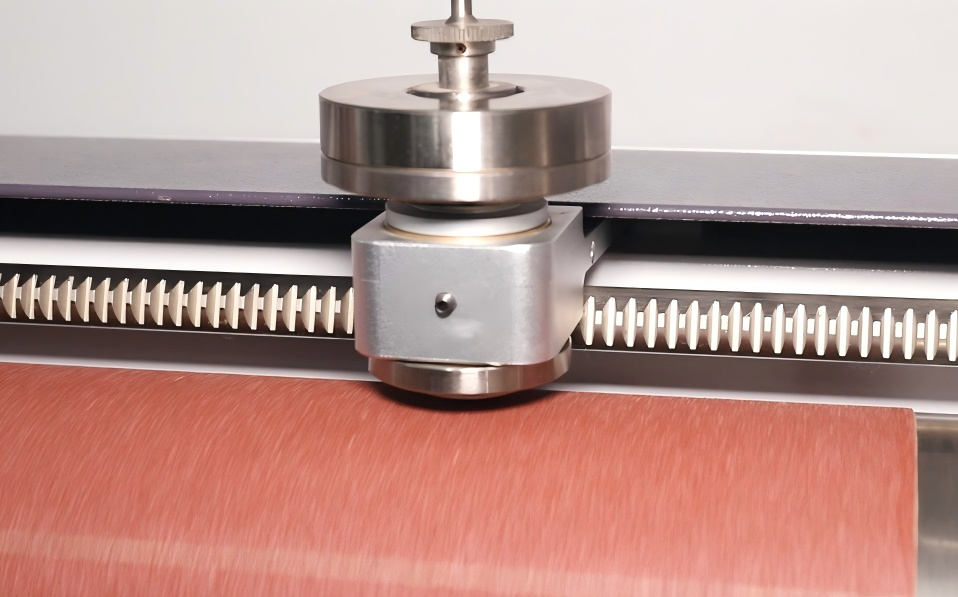
For rubber products subjected to constant friction — tire treads, shoe soles, conveyor belts — abrasion resistance is one of the most telling indicators of service life. An NBS Rubber Abrasion Tester, compliant with ASTM D1630, is designed to assess the wear resistance of materials by applying a specific load and rubbing the test piece against rotating sandpaper. This type of equipment is particularly well suited for evaluating rubber products and sole materials, providing manufacturers with quantifiable wear data rather than relying on field complaints to identify weak formulations.
4. Tensile and Mechanical Strength — The Foundation of Structural Reliability
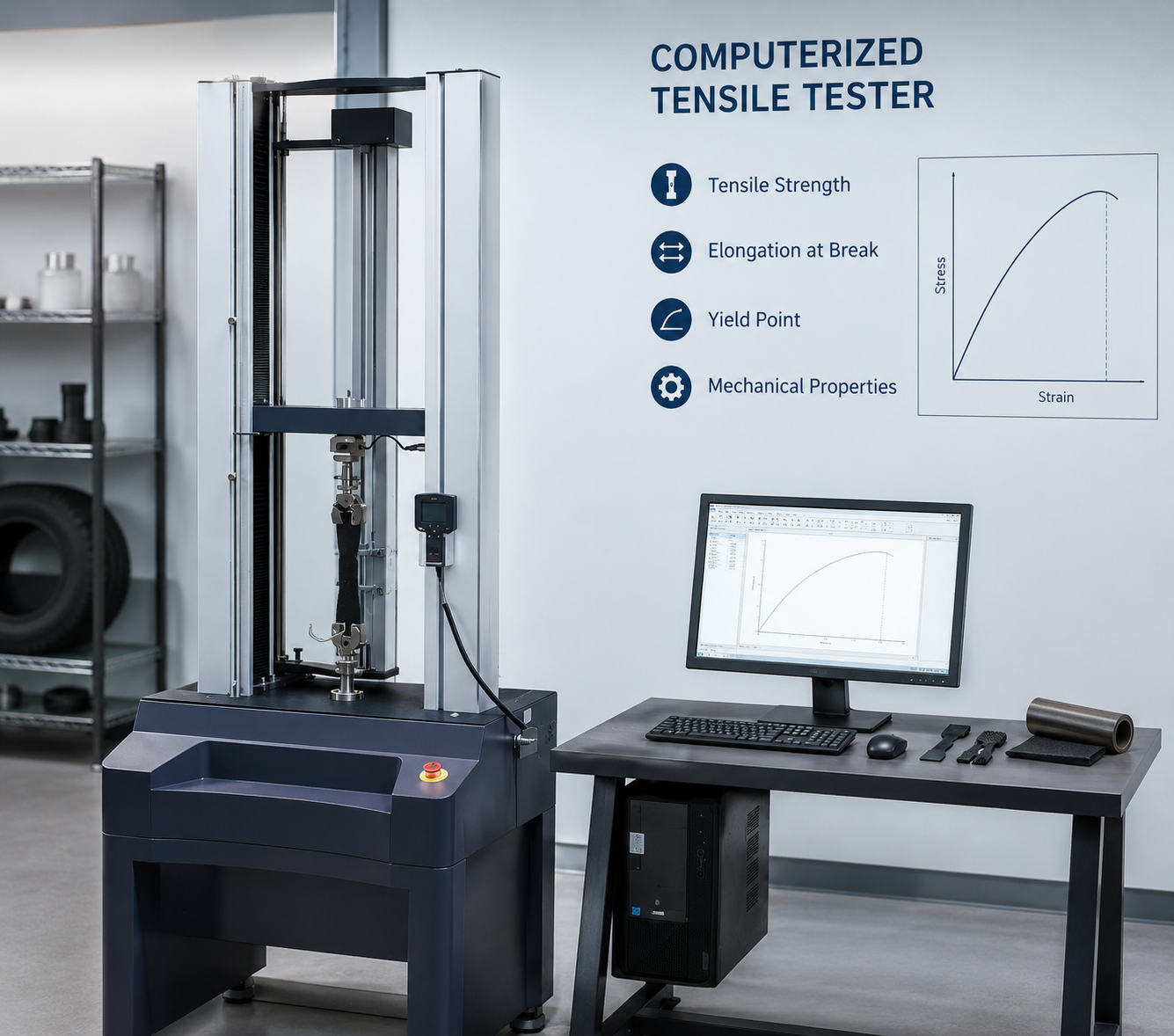
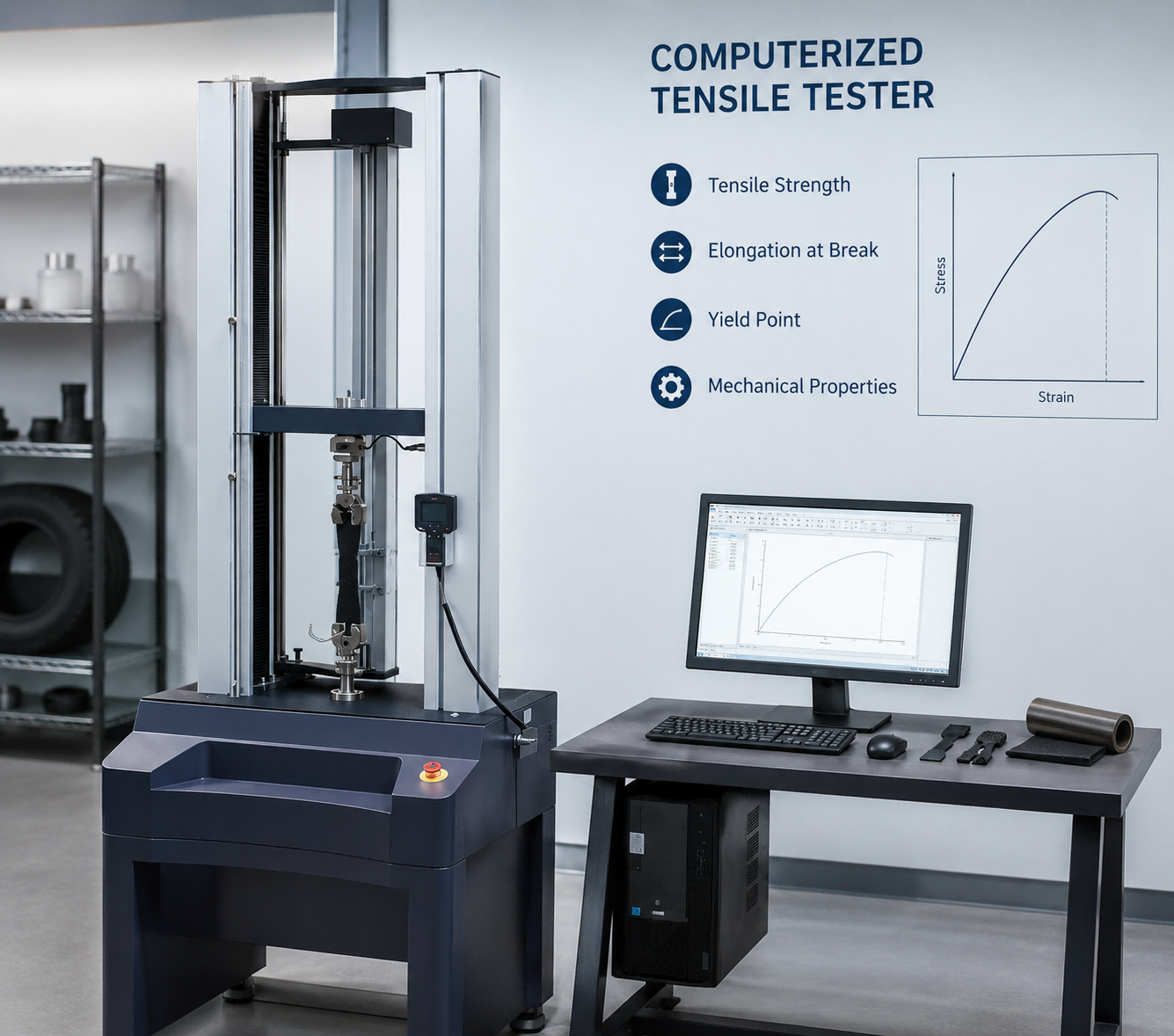
Beyond wear and chemical resistance, rubber and tire components also need to withstand mechanical stress — stretching, bending, tearing — without failing prematurely. A Computerized Tensile Tester is widely used across rubber and plastic, footwear, leather, textile and other materials to test tensile strength, elongation at break, yield point and related mechanical properties. This kind of universal testing equipment allows manufacturers to verify that a compound or finished part meets baseline mechanical requirements before it reaches production scale.
5. Why a Systematic Testing Approach Matters
Conclusion
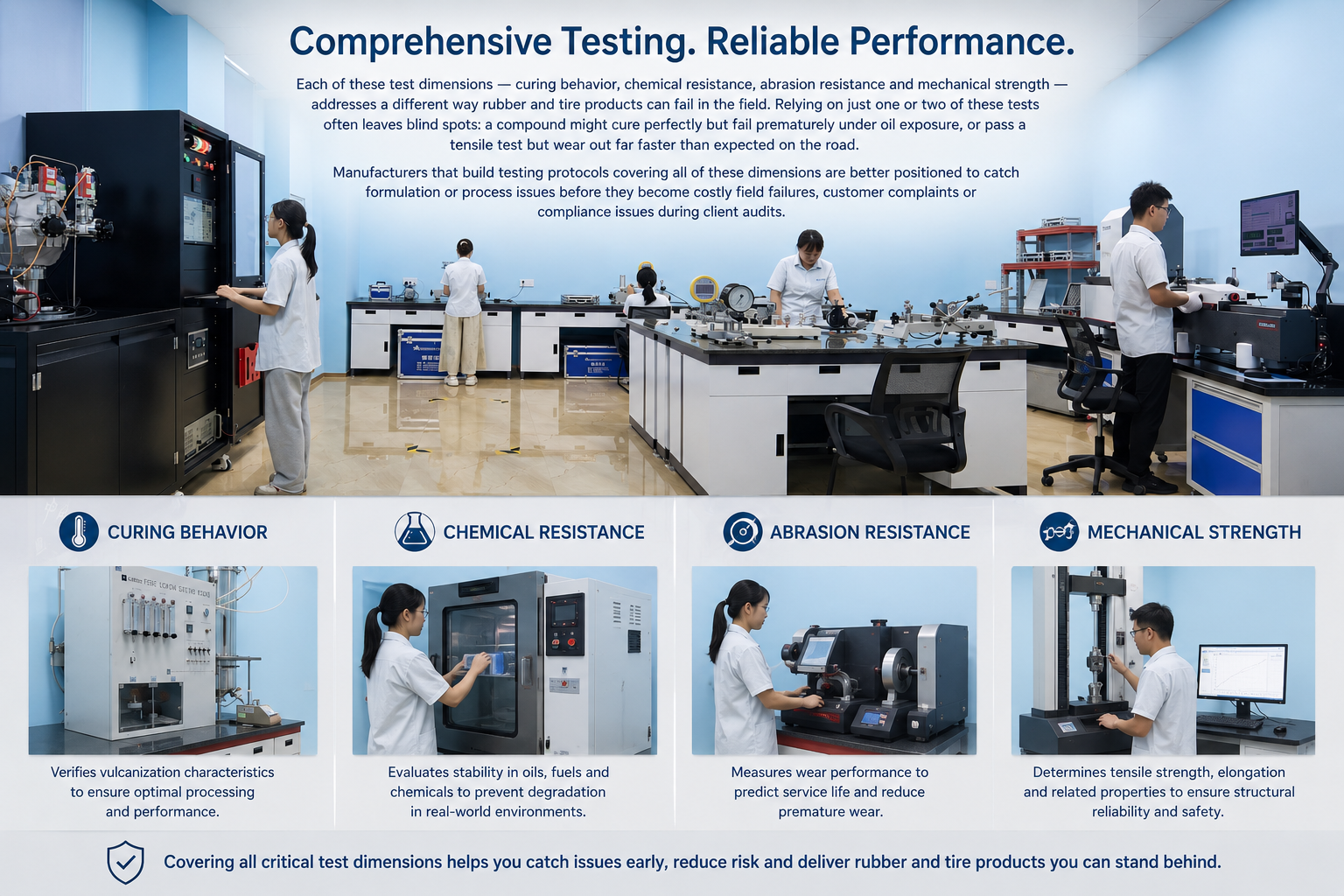
As rubber and tire applications continue to diversify — from automotive tires to industrial seals to footwear soles — the performance bar placed on these materials keeps rising. A systematic approach to testing, covering curing characteristics, chemical resistance, abrasion resistance and mechanical strength, gives manufacturers the data they need to make informed formulation decisions, pass client and regulatory audits, and ultimately deliver products that perform reliably over their intended service life.
Beyond Look and Feel: 5 Critical Performance Tests Every Leather Manufacturer Should Know
Related Article

As a core raw material for footwear, leather goods and apparel, leather's flex resistance, hardness, abrasion-related color fastness and shrinkage temperature directly determine the lifespan and perceived quality of finished products. This article takes an industry-resource perspective, outlining the key testing dimensions and common standards used to evaluate leather quality — a useful reference for raw material control and quality management.
Beyond Look and Feel: 5 Critical Performance Tests Every Leather Manufacturer Should Know
In recent years, the international footwear testing standard system — built around ISO 20344 and its related EN ISO 20345/20346/20347 series — has undergone continuous revisions. Slip resistance, waterproofing, anti-static (ESD) performance, abrasion resistance and thermal performance have become key focus areas for footwear manufacturers seeking to meet evolving safety and quality requirements.
Footwear Safety Standards Continue to Evolve: Slip Resistance, Waterproofing and ESD Performance Take Center Stage
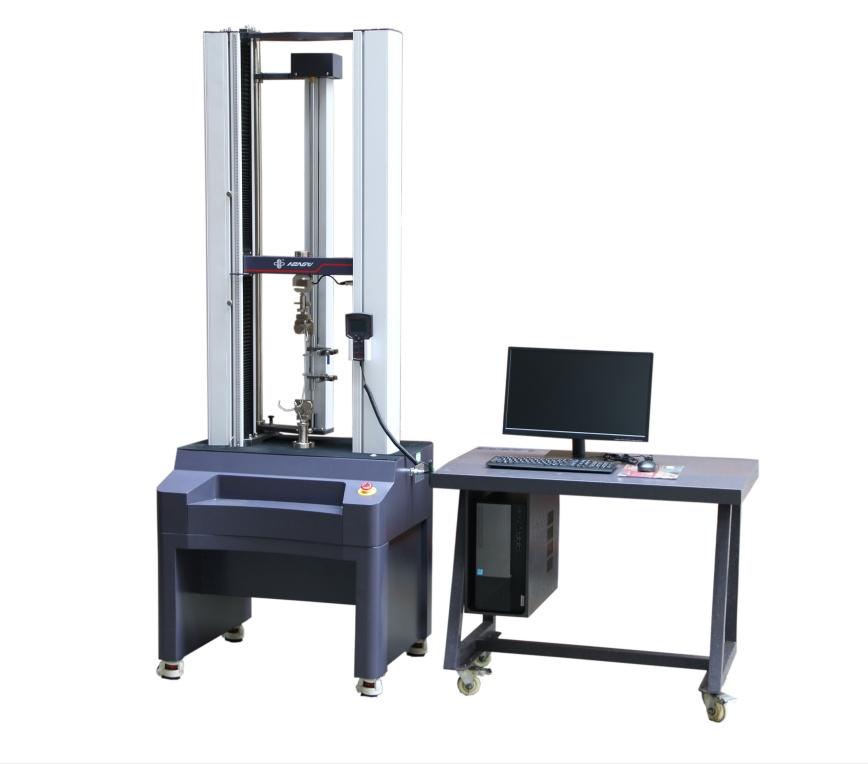
It details its wide application scope, international compliance standards, industry-leading drive hardware configurations, independently-developed intelligent software, and multi-layered safety mechanisms. Designed specifically for corporate news and external marketing distribution with a balance of technical depth and promotional appeal.
Universal Tensile Strength Testing Machine: Precision Measurement, Fortifying the Foundation of Quality