Footwear Safety Standards Continue to Evolve: Slip Resistance, Waterproofing and ESD Performance Take Center Stage
Footwear Testing Standards: From "Unified Methods" to "Category-Specific Requirements"
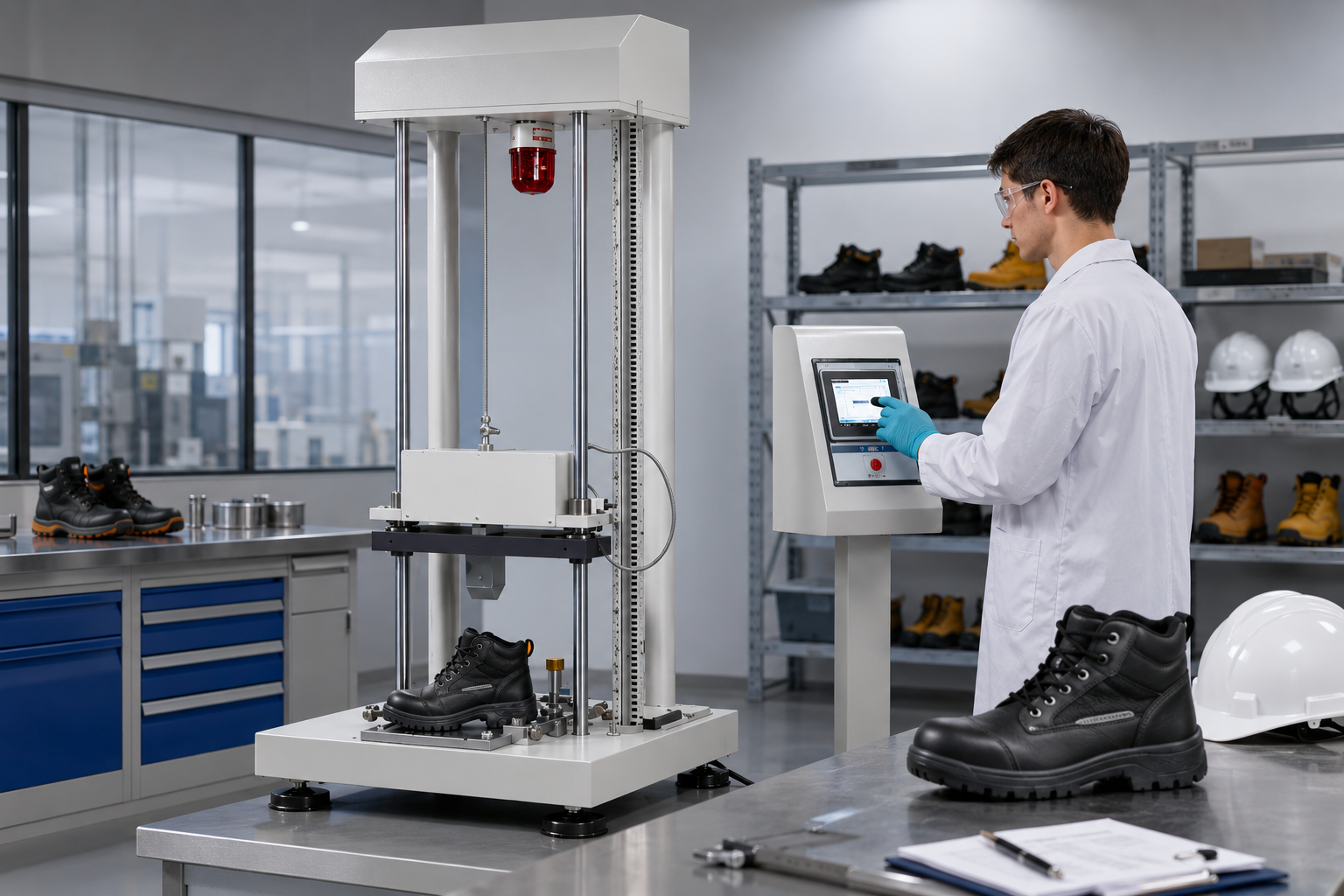
Footwear is a critical category within the broader personal protective equipment (PPE) framework, and its testing requirements are supported by a fairly comprehensive international standard system. ISO 20344 serves as the foundational "method standard," defining unified test methods for various footwear performance indicators. Building on this foundation, EN ISO 20345 (safety footwear), EN ISO 20346 (protective footwear) and EN ISO 20347 (occupational footwear) each specify performance requirements tailored to different risk levels and use cases.
In recent years, this standard system has gone through multiple rounds of revision — the EN ISO 20345, 20346 and 20347 series were updated in 2022, while ISO 20344 received an amendment in 2024. The continued refinement of these standards reflects the industry's growing emphasis on footwear safety and comfort performance, and places higher demands on manufacturers' in-house testing capabilities.
Key Testing Dimensions for Footwear Products
Under the current standard framework, footwear quality testing generally focuses on the following dimensions:
1. Slip Resistance
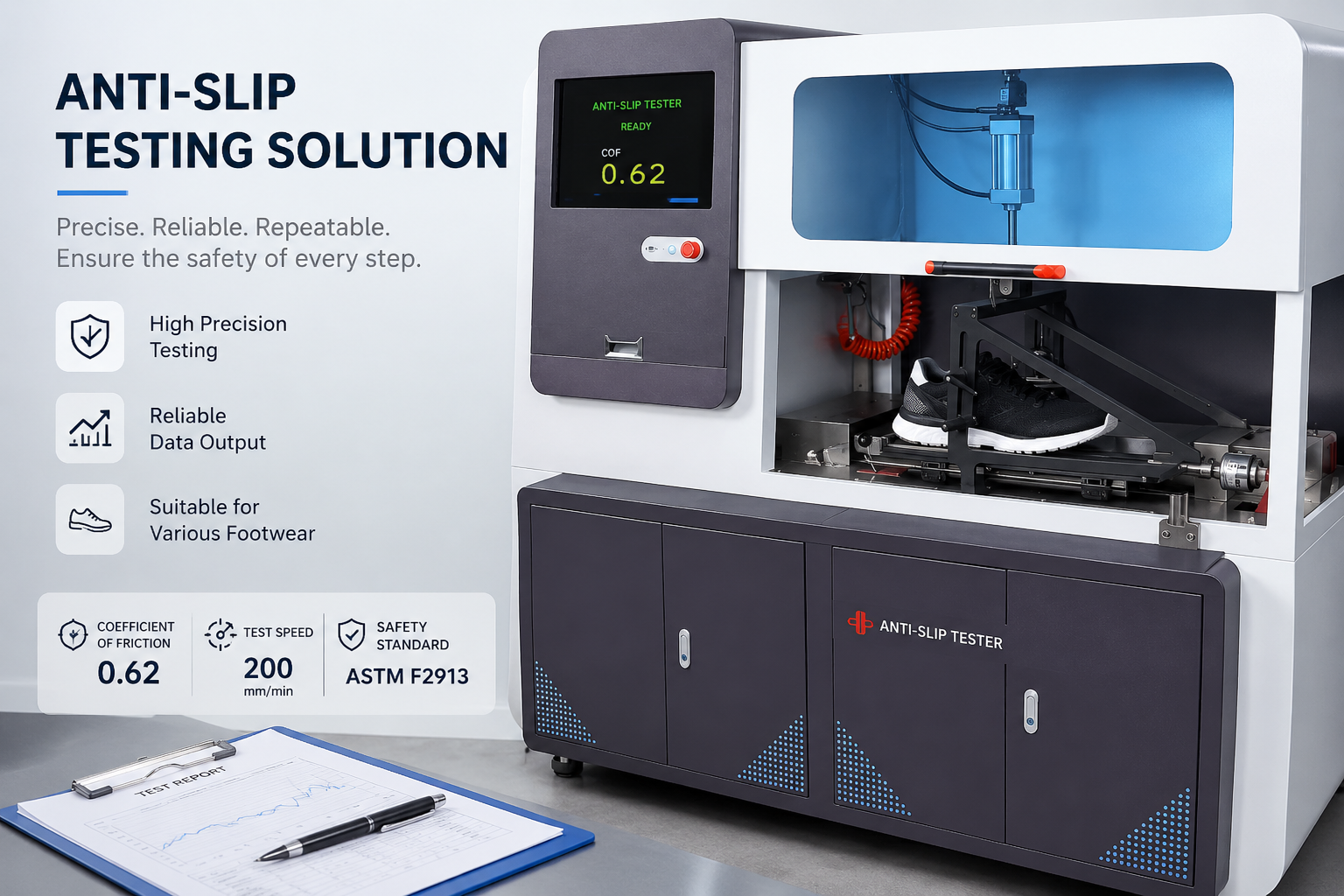
The friction coefficient between the outsole and the floor surface is a core indicator of footwear slip resistance, with test methods referenced in standards such as ISO 13287. This is particularly relevant for safety shoes, work boots and anti-slip slippers. Testing typically involves measuring the static and dynamic friction coefficients of the outsole against different floor materials (such as ceramic tile or stainless steel) under various lubrication conditions.
2.Waterproofing and Water Penetration Resistance
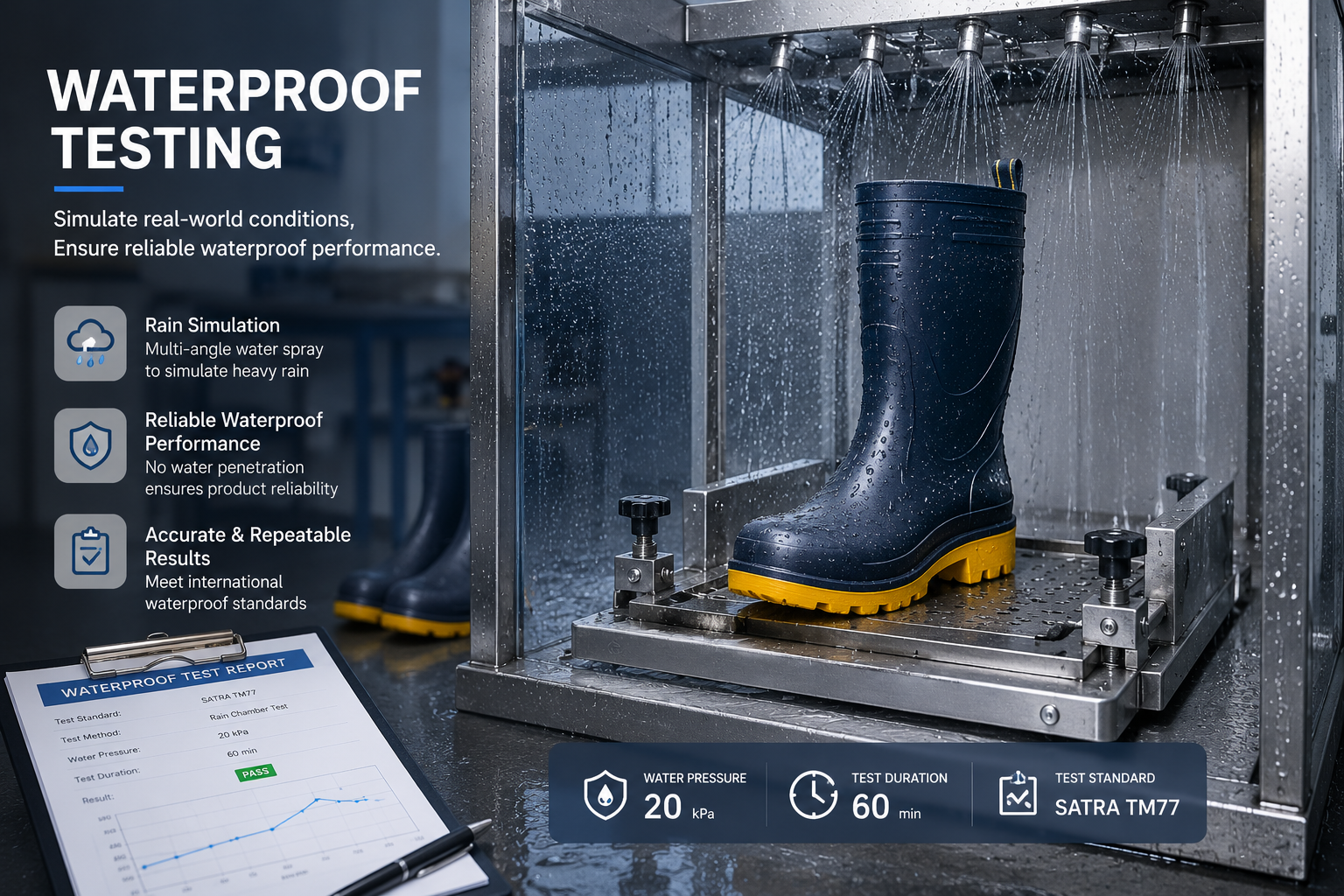
For rain boots, outdoor footwear and protective work boots, waterproofing tests go beyond simple static immersion. Dynamic water penetration testing — which simulates the flexing motion of walking under constant water pressure — provides a more realistic evaluation of real-world wear conditions.
4. Abrasion and Fatigue Resistance
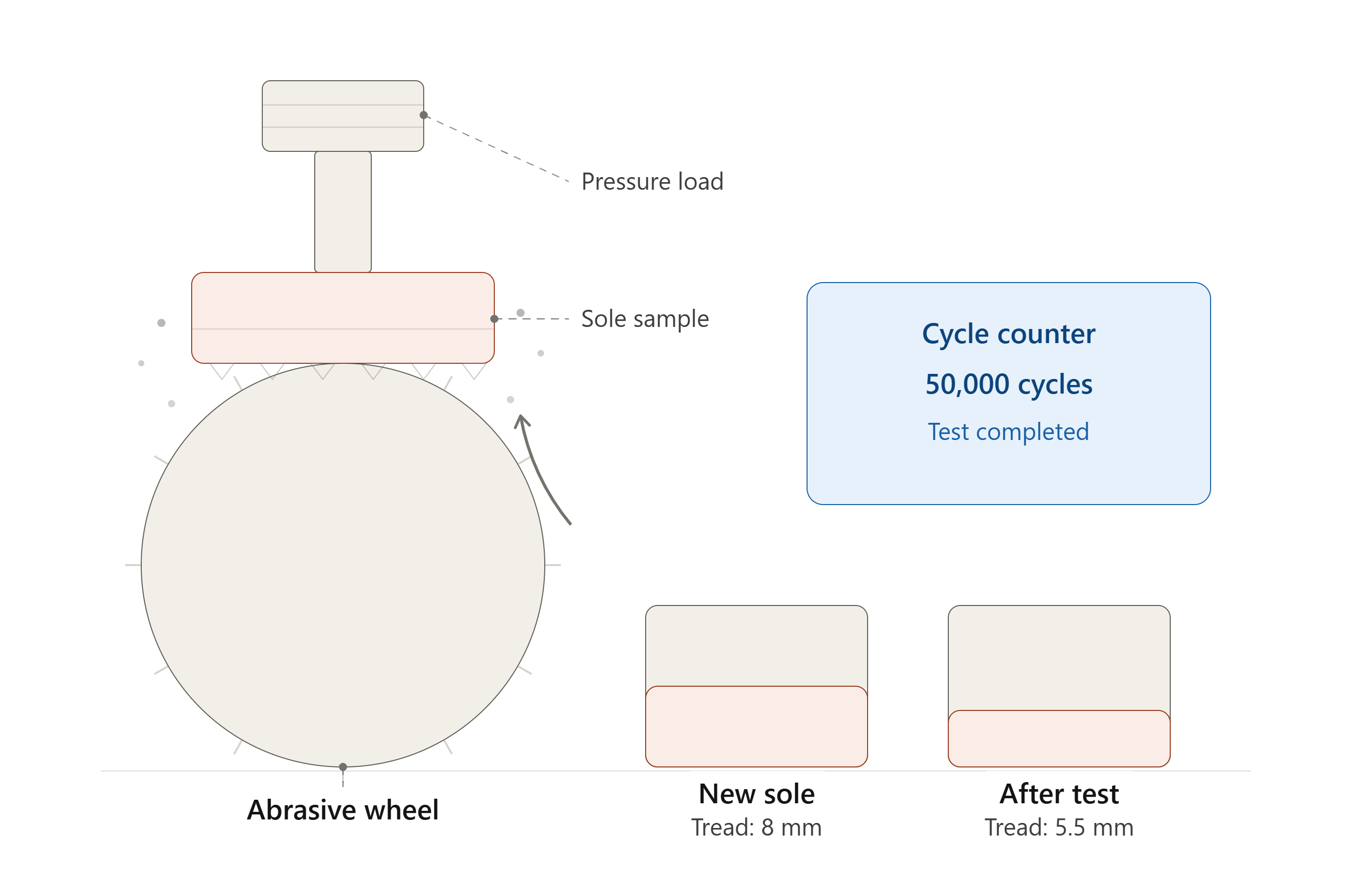
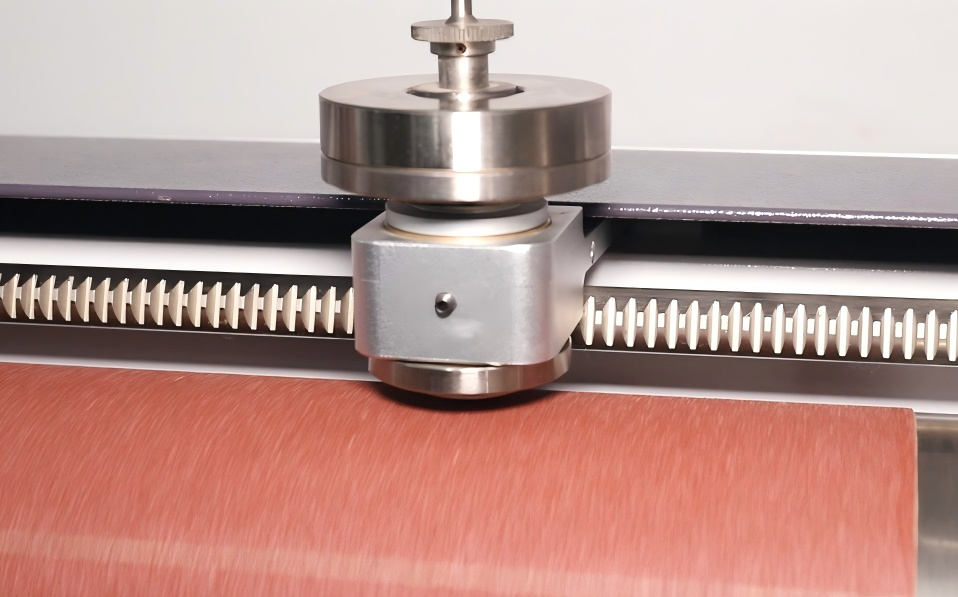
The abrasion resistance of outsole materials and the flex-fatigue performance of the whole shoe directly affect product lifespan. These properties are typically evaluated by simulating tens of thousands of friction or flexing cycles and assessing the resulting wear volume or surface cracking.
What Standard Updates Mean for Manufacturers
For footwear manufacturers, the continuous evolution of testing standards carries several practical implications:
First, products that previously met requirements may no longer be compliant under updated standards, making it necessary to periodically review the validity of existing test reports.
Second, as test items and evaluation criteria become more granular, in-house testing capabilities — including equipment precision and the range of test items covered — need to keep pace. Otherwise, manufacturers risk being caught off guard during client audits or customs inspections.
Third, manufacturers with robust in-house testing capabilities are better positioned to pass overseas client audits and enter new markets. Testing capability itself is increasingly becoming a form of competitive advantage.
Conclusion
As footwear safety and quality standards both domestically and internationally continue to be refined, "test before production, test before shipment" is becoming a standard workflow for footwear manufacturers rather than an optional step. Companies are encouraged to stay informed about updates to ISO, EN and other standard systems, and to build out testing capabilities — covering slip resistance, waterproofing, ESD performance, abrasion/fatigue resistance, and cold/heat resistance — that align with their specific product positioning.
Beyond Look and Feel: 5 Critical Performance Tests Every Leather Manufacturer Should Know
Universal Tensile Strength Testing Machine: Precision Measurement, Fortifying the Foundation of Quality
Related Article