

AUT fully automatic ultrasonic testing
HSD-PA
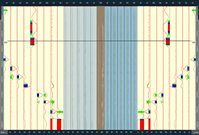
The principle of AUT detection is "region division method". The weld is divided into several vertical regions according to the wall thickness, groove form and filling times. The height of each partition is generally 1mm to 3mm, and each region is scanned by a group of independent wafers. In automatic welding, the main defect is lack of fusion, that is, the beam is as perpendicular to the fusion line as possible.
Quantity:
The AUT Ultrasonic Testing Machine, also a Portable AUT Ultrasonic Tester, is equipped with a state-of-the-art scanner system for accurate and efficient weld inspection, featuring Automated Weld Inspection and an AUT Scanner with Phased Array Technology. As Multi-Channel AUT Scanning Equipment, this device is perfect for oil & gas pipeline inspections, flaw detection, and NDT testing—functioning as a reliable Ultrasonic Flaw Tester NDT. Say goodbye to manual inspections and ensure reliable results with our automated UT solution, including the AUT Scanning System for Pipeline Inspection.
Functional features
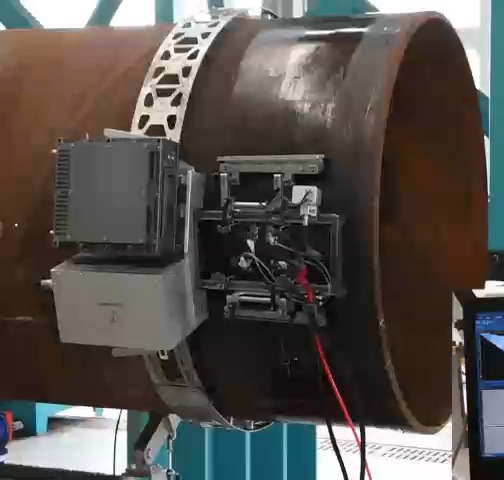
The Ultrasonic Flaw Tester NDT has a high degree of integration: the detection module and walking mechanism are integrated, with only one optical fiber needed to transmit signals—enhancing the performance of the AUT Ultrasonic Testing Machine.
The Ultrasonic Testing Machine offers fully automatic scanning, saving time and effort while improving efficiency; scanning speed is graded and adjustable to meet walking requirements under different detection conditions, a key feature of the AUT Scanning System for Pipeline Inspection.
The Ultrasonic Testing Machine module adopts a 1:2 pipeline upper and lower self-circulating water cooling system, effectively ensuring normal operation in high-temperature environments—vital for the Portable AUT Ultrasonic Tester.
A scan, B scan, bar graph, and TOFD grayscale image can be displayed on the same screen and automatically played back, supporting Automated Weld Inspection.
Recommended configuration
- Instrument: HSD-PA instrument (compatible with the AUT Ultrasonic Testing Machine)
- Probe: Phased array probe 7.5L64-1.0x10-A4-110-P-0.8-IPEX; SA4 phased array wedge 2 C543 (5MΦ6) TOFD probe; 63°TOFD wedge
- Scanner: AUT automatic scanner (core to Multi-Channel AUT Scanning Equipment)
Application
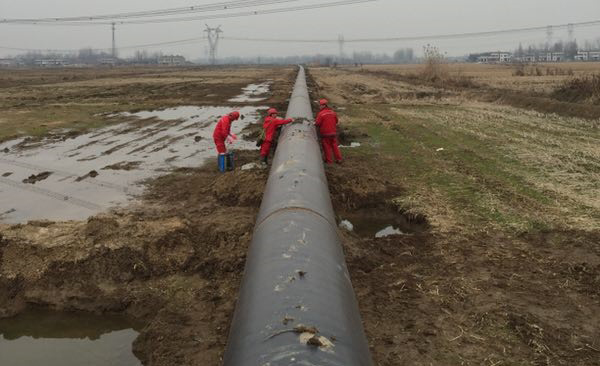
Petrochemical, shipbuilding, offshore oil platform, and other fields—including PetroChina long-distance pipelines, large-diameter medium-thick pipes’ automatic welding butt joint annular seams, and as an AUT Pipe Inspection System for Oil & Gas. The AUT Scanning System for Pipeline Inspection, paired with the Portable AUT Ultrasonic Tester and Ultrasonic Flaw Tester NDT, ensures thorough inspections across these sectors.
Petrochemical, shipbuilding, offshore oil platform, and other fields—including PetroChina long-distance pipelines, large-diameter medium-thick pipes’ automatic welding butt joint annular seams, and as an AUT Pipe Inspection System for Oil & Gas. The AUT Scanning System for Pipeline Inspection, paired with the Portable AUT Ultrasonic Tester and Ultrasonic Flaw Tester NDT, ensures thorough inspections across these sectors.